
Introduction
An RFID transponder coil is an essential component of many Radio Frequency Identification (RFID) systems. It enables wireless communication between an RFID tag and a reader by receiving and Trigger Coil transmitting radio frequency signals. These coils are widely used in access control systems, inventory management, vehicle identification, industrial automation, contactless payment technologies, and asset tracking solutions.
As businesses continue to adopt smart identification technologies, RFID systems have become increasingly important for improving efficiency, reducing manual work, and enhancing security. Understanding how an RFID transponder coil works, its applications, and its benefits can help businesses and manufacturers select the right components for their projects.
What Is an RFID Transponder Coil?
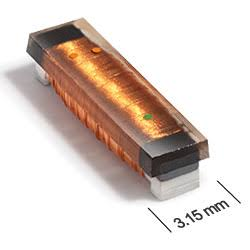
An RFID transponder coil is a conductive wire winding or antenna structure designed to interact with electromagnetic fields. It forms a critical part of many RFID transponders, particularly passive RFID tags that receive energy from an RFID reader.
When a reader generates a radio frequency field, the coil captures electromagnetic energy and converts it into an electrical signal. In passive RFID systems, this energy can power the tag’s integrated circuit, allowing it to communicate its stored identification information back to the reader.
The design of an RFID transponder coil depends on the operating frequency, required reading distance, available space, and intended application. Some coils are made from fine copper wire, while others use printed conductive traces on a circuit board or flexible substrate.
How Does an RFID Transponder Coil Work?
The working principle of an RFID transponder coil depends on electromagnetic induction and radio frequency communication.
When an RFID reader is activated, it produces an electromagnetic field. If a compatible RFID transponder enters this field, its coil interacts with the signal and generates an electrical voltage.
In a typical passive RFID tag, the process involves several stages:
- Signal generation: The RFID reader produces a radio frequency signal.
- Energy reception: The transponder coil captures energy from the reader’s electromagnetic field.
- Circuit activation: The received energy powers the tag’s integrated circuit.
- Data communication: The tag communicates its identification data using the method supported by the RFID system.
- Information processing: The reader receives and processes the response.
The exact communication method varies according to the RFID frequency and system design. Low-frequency and high-frequency RFID systems commonly use inductive coupling, while ultra-high-frequency RFID systems generally rely on electromagnetic wave propagation and backscatter communication.
Therefore, selecting a coil or antenna that matches the intended RFID technology is essential for reliable operation.
Types of RFID Transponder Coils
Different RFID applications require different coil designs. Several common types are available for electronic devices and identification systems.
1. Low-Frequency RFID Coils
Low-frequency RFID typically operates around 125 kHz or 134.2 kHz. These coils are often used in animal identification, industrial equipment tracking, and certain access control systems.
Low-frequency coils can perform reliably in environments where some materials may interfere with higher-frequency signals. However, their reading distance is generally limited, and the coil size can influence overall performance.
2. High-Frequency RFID Coils
High-frequency RFID commonly operates at 13.56 MHz. These coils are widely used in contactless smart cards, NFC-compatible devices, library management systems, and ticketing applications.
High-frequency transponder coils are often manufactured as compact wire windings or printed antennas. Their design must balance inductance, resistance, and antenna tuning to achieve effective communication.
3. Custom RFID Transponder Coils
Custom coils are developed for applications with specific size, shape, electrical, or environmental requirements. Manufacturers may adjust the number of turns, wire thickness, coil dimensions, and materials to meet a particular design specification.
Custom solutions can be useful for wearable electronics, compact sensors, specialized access cards, and industrial equipment with limited installation space.
Key Factors Affecting RFID Transponder Coil Performance
Choosing the right RFID transponder coil involves evaluating several technical characteristics.
Inductance
Inductance influences how the coil interacts with the electromagnetic field and how it behaves within the RFID circuit. In many inductively coupled RFID systems, the coil works with a capacitor to create a resonant circuit.
Proper tuning helps the transponder operate effectively at its intended frequency.
Coil Size and Shape
The dimensions and geometry of a coil can affect its inductance, coupling efficiency, and physical integration. Larger coils may provide stronger coupling under suitable conditions, but performance also depends on orientation, frequency, surrounding materials, and circuit design.
Wire Material and Resistance
Copper is commonly used because of its electrical conductivity. Wire diameter, winding quality, and connection methods can affect electrical resistance and manufacturing consistency.
Lower resistance can reduce certain electrical losses, although the optimal design depends on the operating frequency and application.
Operating Frequency
Every RFID system is designed for a specific frequency range. A coil intended for a low-frequency system will not automatically perform correctly in a high-frequency application.
Matching the coil design to the reader and transponder electronics is therefore essential.
Environmental Conditions
Metal surfaces, nearby electronic components, temperature changes, moisture, and physical stress can affect RFID performance. A well-designed coil should account for the actual conditions in which the transponder will operate.
Applications of RFID Transponder Coils
RFID transponder coils support a broad range of modern identification and tracking technologies.
Access Control and Security
RFID-enabled cards and key fobs are commonly used to control access to offices, educational institutions, residential buildings, and restricted facilities. The transponder coil helps establish communication with the reader, allowing the system to identify a credential.
Inventory and Warehouse Management
Businesses use RFID technology to identify products, monitor stock movement, and improve warehouse visibility. RFID tags attached to cartons, containers, and individual items can reduce the need for manual scanning.
The effectiveness of these systems depends on suitable RFID antennas, tag design, reader configuration, and operating conditions.
Automotive Identification
RFID technology is used in vehicle access systems, identification tags, immobilizer applications, and selected transportation systems. Depending on the application, a transponder coil may support communication between a vehicle’s reader and an identification device.
Automotive applications often require components that meet specific durability, reliability, and environmental standards.
Healthcare and Medical Equipment
Hospitals and healthcare facilities can use RFID systems to track equipment, manage supplies, and identify tagged assets. Compact transponder coils help enable identification in devices and tags designed for these environments.
Appropriate system design is important to ensure reliable operation around other equipment and materials.
Contactless Cards and NFC Devices
High-frequency RFID coils are important in many contactless smart cards and near-field communication devices. They support wireless interactions used for identification, information exchange, and compatible payment systems.
The coil must be appropriately designed and tuned to work with the associated chip and reader.
Industrial Automation
Manufacturing facilities use RFID technology to identify components, track work in progress, and manage reusable containers. Transponder coils can support automated identification processes that help improve production visibility and reduce data-entry errors.
Benefits of Using RFID Transponder Coils
RFID transponder coils provide several advantages when correctly integrated into an identification system.
Wireless communication: They enable contactless interaction between compatible RFID tags and readers, reducing the need for physical connections.
Compact integration: Coil designs can be adapted to cards, key fobs, labels, wearables, and other electronic products.
Improved identification efficiency: RFID technology can automate identification processes and reduce reliance on manual data entry.
Support for passive tags: In suitable RFID systems, transponder coils help collect the energy required to operate passive tags without an onboard battery.
Flexible design options: Different coil geometries and materials allow engineers to develop components for a wide range of applications.
Potential for lower maintenance: Passive RFID tags can operate without battery replacement, although their durability and service life depend on the complete tag construction and operating environment.
How to Choose the Right RFID Transponder Coil
Selecting an appropriate coil starts with identifying the requirements of the intended system. Buyers and engineers should consider the following factors:
- Frequency compatibility: Confirm that the coil supports the RFID system’s operating frequency.
- Electrical specifications: Review inductance, resistance, quality factor, and tuning requirements where applicable.
- Physical dimensions: Ensure the coil fits the available installation space.
- Environmental durability: Consider temperature, moisture, vibration, and exposure to nearby metal.
- Communication requirements: Evaluate the required reading distance, tag orientation, and expected operating conditions.
- Manufacturing quality: Check consistency, material quality, connection reliability, and supplier quality-control procedures.
- Application standards: Confirm compliance with relevant industry, safety, and regulatory requirements.
Testing the coil with the intended RFID chip, reader, and final enclosure is particularly important. A component that performs well in isolation may behave differently after installation because nearby materials can alter antenna characteristics.
Conclusion
An RFID transponder coil is a fundamental component in many wireless identification systems. By interacting with electromagnetic fields, it helps RFID tags receive signals, obtain energy in suitable passive designs, and communicate information to compatible readers.
From access control and inventory management to automotive identification, healthcare, and industrial automation, these coils contribute to efficient and reliable data exchange. Their performance depends on factors such as operating frequency, inductance, dimensions, materials, and environmental conditions.
When selecting an RFID transponder coil, businesses and engineers should prioritize compatibility, electrical performance, durability, and application-specific requirements. With the right design and proper testing, an RFID transponder coil can help create an effective identification solution that supports modern automation and connected technologies.