
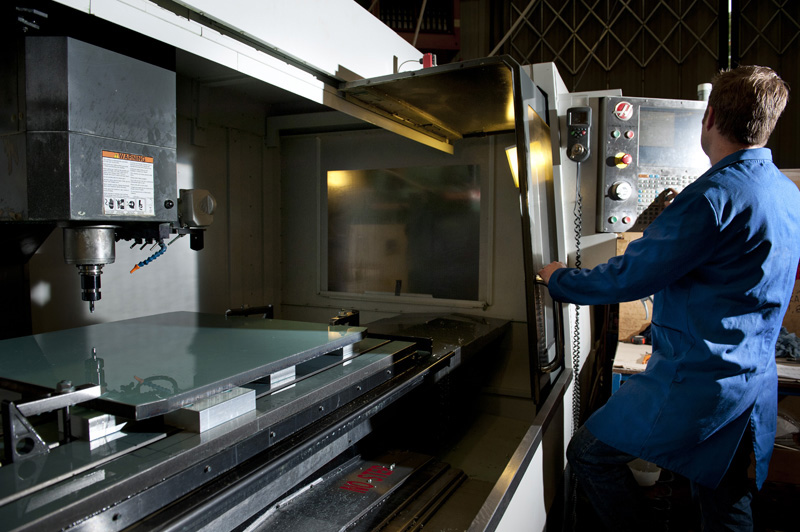
Low volume CNC machining has become a cornerstone for industries seeking precision, flexibility, and cost efficiency in small-scale production. As manufacturing evolves, businesses are increasingly turning to low volume CNC machining to bridge the gap between prototype development and full-scale production. With technological advancements accelerating, the future of low volume CNC machining promises to redefine how manufacturers approach small-batch production.
Integration of Advanced Automation
One of the most significant trends shaping low volume CNC machining is the integration of advanced automation. Traditionally, CNC machines required considerable human oversight, especially for setup, tool changes, and quality inspections. Today, automation technologies like robotic material handling, automatic tool changers, and AI-driven monitoring systems are reducing the need for constant human intervention. This not only increases production efficiency but also allows for greater consistency and precision in small-batch manufacturing.
Automation also facilitates more complex machining operations, such as multi-axis milling and simultaneous drilling, which were previously time-consuming and costly in low volume production. By integrating smart automation, manufacturers can achieve high precision without compromising flexibility, making it feasible to produce intricate components in smaller quantities at competitive costs.
Adoption of AI and Machine Learning
Artificial intelligence and machine learning are gradually transforming low volume CNC machining. Predictive analytics and AI algorithms can now optimize cutting paths, tool selection, and machining parameters based on historical data and real-time monitoring. This allows machines to make intelligent adjustments mid-process, reducing errors, material waste, and downtime.
Machine learning also enhances maintenance strategies by predicting tool wear and potential machine failures before they occur. In low volume CNC machining, where every unit counts, minimizing downtime and ensuring consistency is critical. The adoption of AI-driven systems ensures that even small production runs meet stringent quality standards while maintaining efficiency.
Expansion of Additive and Hybrid Manufacturing
The future of low volume CNC machining is closely linked to the rise of additive and hybrid manufacturing techniques. Hybrid machines that combine subtractive CNC processes with additive manufacturing capabilities enable manufacturers to produce complex geometries that were previously impossible with traditional machining alone. These technologies allow for rapid prototyping, intricate internal structures, and lightweight designs, all while maintaining high precision.
For small-batch production, hybrid machining offers unmatched versatility. Components can be partially 3D printed and then finished with CNC milling, reducing material waste and lead times. This integration is particularly beneficial for industries such as aerospace, medical devices, and automotive, where both precision and customization are paramount.
Focus on Sustainable Manufacturing Practices
Sustainability is increasingly influencing manufacturing trends, and low volume CNC machining is no exception. Modern machining processes are being designed to minimize material waste, reduce energy consumption, and utilize eco-friendly materials. Techniques such as optimized tool paths, high-efficiency cutting tools, and recyclable cutting fluids are becoming standard practices in small-scale CNC operations.
Additionally, manufacturers are adopting digital twins and simulation software to plan machining processes in virtual environments before executing them on physical machines. This approach reduces trial-and-error waste, conserves resources, and shortens production cycles, making low volume CNC machining both cost-effective and environmentally responsible.
Enhanced Materials and Tooling Options
Advancements in materials science are expanding the possibilities for low volume CNC machining. High-performance alloys, composites, and specialty plastics are now easier to machine with modern CNC equipment. These materials offer superior strength, lightweight properties, and heat resistance, enabling manufacturers to meet the demanding requirements of aerospace, medical, and automotive industries even in small production runs.
Similarly, tooling technology is evolving. Coated carbide tools, ceramic inserts, and diamond-tipped cutters allow for faster machining, longer tool life, and improved surface finishes. For low volume CNC machining, where precision and repeatability are critical, these advances provide manufacturers with greater flexibility to experiment with materials without significantly increasing costs.
Remote Monitoring and Industry 4.0 Connectivity
The trend toward Industry 4.0 is transforming low volume CNC machining by connecting machines, operators, and production data in real-time. Smart CNC machines equipped with IoT sensors can transmit performance data to cloud platforms, enabling remote monitoring, diagnostics, and optimization. Manufacturers can track production progress, identify bottlenecks, and adjust workflows without being physically present on the shop floor.
Remote monitoring also supports predictive maintenance and quality control, reducing the risk of production delays. For small-scale manufacturing, this connectivity ensures that even limited production runs can be efficiently managed, maintaining high-quality standards while reducing operational overhead.
Customization and On-Demand Manufacturing
One of the most defining trends in low volume CNC machining is the shift toward customization and on-demand manufacturing. Customers increasingly expect tailored products and components, and small-batch production is ideal for meeting these demands. CNC technology enables manufacturers to quickly adapt designs, adjust specifications, and produce unique parts without the costs associated with mass production tooling.
This trend is reinforced by digital workflows, where CAD models can be modified instantly and sent directly to CNC machines for production. By embracing on-demand manufacturing, businesses can reduce inventory costs, respond faster to market changes, and offer personalized products while maintaining precision and quality.
Integration with Simulation and Virtual Design
Simulation software is becoming a vital tool in low volume CNC machining. Advanced CAM programs allow engineers to test machining strategies virtually, predict potential issues, and optimize processes before production begins. This reduces trial-and-error, shortens lead times, and ensures that even small production runs achieve the desired results.
Virtual design and simulation also enable collaboration across geographically dispersed teams. Engineers, designers, and machinists can review models, suggest improvements, and validate production methods digitally. This integration accelerates innovation and improves efficiency, particularly in industries where speed and precision are critical.
Implications for Workforce and Skills Development
As low volume CNC machining becomes more technologically advanced, the required workforce skills are evolving. Operators must now be proficient in programming, automation control, data analytics, and maintenance of smart CNC machines. The rise of AI, hybrid manufacturing, and Industry 4.0 connectivity emphasizes the need for continuous training and upskilling.
While automation reduces manual labor, it increases the demand for highly skilled technicians who can oversee sophisticated systems, troubleshoot issues, and implement process improvements. Investing in workforce development ensures that companies can fully leverage emerging CNC technologies and maintain a competitive edge in small-scale production.
Conclusion
The future of low volume CNC machining is defined by technological innovation, sustainability, and adaptability. Automation, AI, hybrid manufacturing, advanced materials, and Industry 4.0 connectivity are transforming how small-batch production is approached, making it faster, more precise, and more efficient than ever before.
As customization and on-demand production become the norm, low volume CNC machining will continue to play a pivotal role in industries that require high-quality, flexible manufacturing solutions. By embracing these trends, manufacturers can not only meet the demands of today’s market but also shape the future of precision manufacturing. Low volume CNC machining is no longer just a stepping stone between prototyping and mass production—it is a strategic advantage in an era of rapid innovation and changing